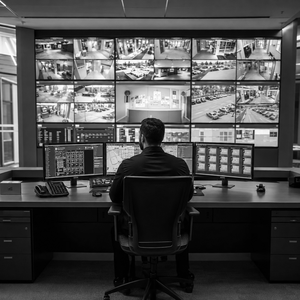
SPS is an integrated software ecosystem that brings together facility management processes in a single centralized platform through card-based access control, visitor management, employee tracking, electronic payment, camera, and fire system integrations. Developed by Technolife with over 20 years of industry experience and long-term R&D efforts, SPS offers modular and scalable solutions for a wide range of needs, from security to operational management. Its cloud-supported infrastructure provides secure, fast, and easy access to systems while making all facility processes centrally manageable, trackable, and reportable.
Control all your modules through a single management panel. Access user, device, access, payment, and security data centrally. SPS is modularly configured according to your business needs. As your needs grow, new modules can be easily added to the system.
SPS goes beyond access control by transforming an organization’s security and operational data into meaningful reports. Employee entries and exits, shifts, overtime, authorized area access, and visitor movements can be centrally monitored. Spending processes can also be tracked through e-wallet and payment modules. The data collected can serve as a basis for employee management, shift planning, time and attendance tracking, and payroll calculations. Thus, the system answers not only the question of “who accessed?”, but also “when, with what authorization, and as part of which operation did it occur?”
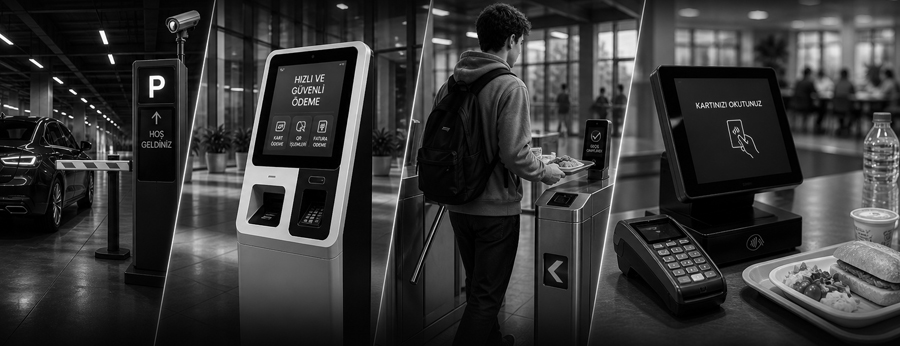
In addition to card-based access and security management, SPS can also manage electronic payments, collections, and field operations from a single centralized platform. Credit loading onto employee or user cards, card balance and spending tracking, cafeteria and canteen payments, parking fee collection, self-service payment kiosks, POS devices, and automated sales points can all be configured within this framework.
The system can work with various payment methods, including credit cards, debit cards, contactless payments, NFC, QR codes, cash acceptance devices, and e-wallets. Following a payment, an automatic trigger can be sent to a turnstile, door, parking barrier, vending machine, or relevant service point, enabling the transaction to be completed end to end.

SPS operates seamlessly with the TC-101 door control and card-based access control panel, developed by Technolife and one of the platform’s most important field components. Serving as SPS’s capable on-site assistant, TC-101 can manage card readers, door contacts, exit buttons, electric and magnetic locks, turnstiles, and relay-controlled peripheral devices.
The Wiegand, transparent RS232/RS485, and Modbus communication support on the TC-101 plays an important role in integrating peripheral devices from different brands and with different specifications into the SPS ecosystem. Thanks to these features, TC-101 can serve as a communication bridge between third-party devices and SPS when required, enabling existing hardware to be integrated into the centralized system.
With its online and offline operating capabilities, TC-101 supports the continuity of field operations in the event of connection issues. This allows existing infrastructure to be utilized as much as possible, prevents unnecessary hardware replacements, and provides flexible solutions for project-specific integration requirements.
One of SPS’s most important features is that field devices can continue operating offline. When the internet or central connection is interrupted, authorization information and access records can be stored on the devices and transferred to the central system once the connection is restored. However, an internet outage and a power outage are not the same. For uninterrupted operation, control panels, network infrastructure, power supplies, and, where necessary, a UPS system should be planned together. This distinction must be taken into account in project design.
No. SPS has a modular structure. Depending on the needs, you can start with access control and later add visitor management, employee tracking and time & attendance, card printing, e-wallet, cafeteria and payment, parking, or CCTV integration to the system. However, modules planned to be added in the future should be taken into consideration during the initial project design. If user identities, card structure, authorization model, and data architecture are properly designed from the outset, evolving needs can be addressed with lower costs and less operational workload.